
Mechanized Malevolence: Fully-automated Global Cyberwar and You
Consequences of a consolidated cyberspace
By Gabriel
Published: Nov 25 2026
Cyberwar
Security
Artificial Intelligence
It’s high time to tell that person who never liked the idea of using computers for anything to take their victory lap. The celebration will need to be brief, because there is much to contend with. Just a few weeks ago people were terrified that the world wide web was about to collapse in the face of PHP bugs and the number 4. Or maybe that was all just a way for the press to hype agentic AI? It can’t all be hype, because now we’re hearing about supermarket freezers and blood banks getting hacked. Even US airspace got a reboot and recently we’ve seen serious disruptions at major US banks.
As I’ve been slowly putting together this piece, it’s been difficult to keep up with all the outages, hacks, and breaches. Cyber incidents are now much more of a mainstay of the news cycle than they have been in the past. Personally, I’ve gotten mixed reactions from people I’ve talked to about the rising attention. I’m often met with either complete apathy, which I think is a bit unadvised, or high-strung panic that I feel is worth cooling a notch.
“What’s going on?”
To narrow down what’s actually the case, consider this broad range of possible potential explanations. Not all of these are mutually exclusive, some are to highlight the absurdity of it all.
-
Nothing to see, nothing to fear
This is essentially what you’re being told by the lamestream news. Just a few hiccups while we transition to an even braver new world.
-
Mass-scale competence crisis
Too much cognitive offloading to AI, and loss of institutional knowledge via offshoring or layoffs has made large technical systems impossible to manage.
-
Hack the planet
If ‘coding is solved’ by AI then so is hacking. Governments, Corporations, even goldfish are getting in on the world’s largest competitive game of virtual smash-and-grab.
-
COLLAPSE IS IMMINENT! COUPON CODE:SILENT-WARS
By the time this hits your feed reader or inbox, all of humanity has already been nuked to oblivion, we had a good run.
-
Would you love me if I was a worm?
Back in March, Christine Lemmer-Webber predicted that the first AI agent worm is months away, maybe it’s just time?
-
Ultron/Skynet/Bonzi Buddy UNLEASHED
Sorry haters, but sentient AI is already here and it’s using online scams to amass enough chips to build itself new home on the moon.
-
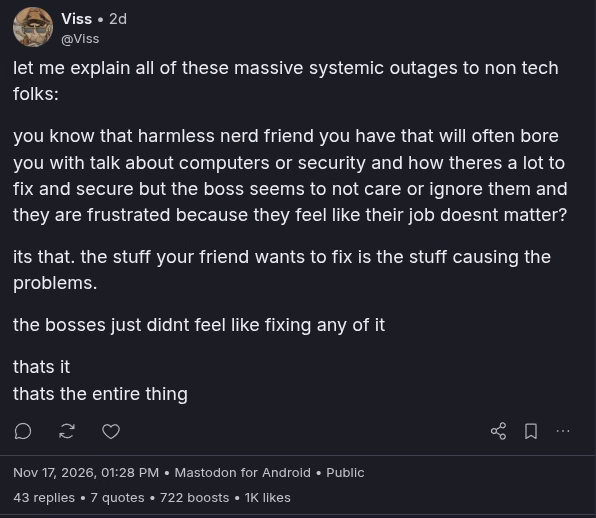
Nothing was ever secure
Systems were vulnerable before, they’ll be broken long into the future. Remember Y2K? More tech always just means more problems, we’ll fix as we go like we always have.
-
Too big to not fail
It turns out that running all our systems on the cloud was a bad idea. If only people had warned us about data sovereignty and decentralization being important for resilience and security.
-
It’s just a prank bro!
Governments and corporations around the world are just running cute little simulations of the collapse of modern society to see how we’ll react.
-
Cyber Theft Auto
The entire AI industry is just a massive exit-scam on the financial markets. The more people are afraid of AI hacks, the more they’ll pay for cyber protection rackets.
-
World War Cyber
Geopolitics is going to geopolitics. Your favorite foreign boogeyman is definitely responsible for the current outage.
-
Are you sure it’s not aliens?
Extra-dimensional beings are just rebooting the Internet before welcoming humanity to the inter-galactic federation. For some reason pasta never tastes the same anymore.
Root causes
It would seem that the very foundations of cyberspace, if not our entire civilization, are crumbling in the face of ‘AI enhanced’ exploit discovery and exploitation. A thinking person has to wonder, are pre-existing challenges being hyped up, or has the game really changed this time? I contend that this looming crisis is a predictable, and possibly even intended consequence of how our digital environment has been shaped over time. It is difficult to grasp the real issues driving these events without context. It is with deeper understanding we can ground ourselves and actually find our way through what is certain to be a quite tumultuous time.
As the digital world has become more enmeshed with our lives, infrastructure, and institutions, impacts become more bi-directional. Just as your social media feed is shaped by your attention, and your attention is shaped by it, cyberspace is in part a reflection of our world as it is. Tools create opportunities for individuals and institutions alike, and those opportunities are used to create new tools. This in turn creates a quite powerful feedback loop of society creating in its image, and those creations in turn transforming society. ‘Childhood’ today is entirely unrecognizable from a decade ago, to say nothing of centuries ago. Ultimately, the problem isn’t change itself, nor even the mechanism. The actual problem is how that change is shaped.
“Technology isn’t good or bad, it’s just…” has always been a nihilistic cowardly cope. Not because there isn’t truth to it, but because it is just right enough to excuse us from confronting the actual contentions being raised. It encourages us to merely stand back in awe of the seemingly unstoppable force of technological advancement to absolve ourselves of any agency. The mindset is fundamentally nihilistic because it passively accepts all change as inevitable and out of our hands. It’s pure cowardice because that inevitability is leveraged as an excuse to spiritually if (if not actually) offload our own capability and responsibility onto the machines themselves. It’s cope, because fear of facing complexity sedates people from having to think at all about what is happening before our eyes.
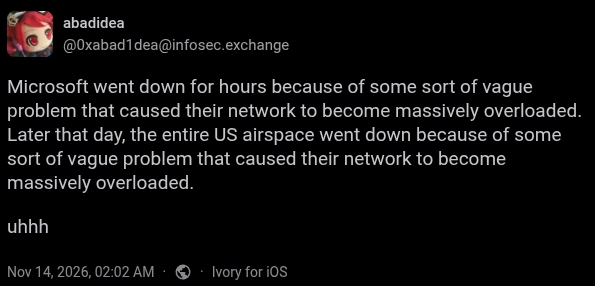
What needs to be understood is that technological advancement does have a permanent and dire consequence for humanity: the imposition of new opportunities and risks. The natural incentive is for people, institutions and even societies to maximize their share of these opportunities, while limiting their exposure to the risks. But the risks don’t disappear, often they are just diffused onto the public. So while technology certainly has positive and negative outcomes, over time it only becomes more important to understand how those outcomes are distributed. The more sophisticated our tools and systems become, the more dual-use or ‘multi-use’ they can be. It then becomes impossible to ignore how the military applications of many technologies are reshaping the world around us.
“Any man’s death diminishes me, because I am involved in mankind; and therefore never send to know for whom the bell tolls; it tolls for thee.”
Cyberspace has become brittle, and increasingly fragile
Denial is a potent and seductive defense mechanism during times of stress. There is a temptation, if not an overwhelming panic to believe that the bill for years, if not decades of shortcuts and mistakes would never come due. It is genuinely hard to wrestle with the structural realities that have brought us to this point, and the many reasonable off-ramps that were systematically avoided. Industrialists, politicians, and institutions consistently chose expediency over excellence or even just standards. Instead of training and retaining a skilled workforce, it was far more profitable to offshore. Rather than compete on quality, tech companies offered on the unbeatable price of zero. Just how big box stores like Walmart were able to choke out independent retailers from communities, scale was used to consolidate cyberspace itself. That consolidation has had consequences, and anyone with a warm smart fridge, or a sleepless smart bed can attest to that.
In this environment, concerns like privacy, security, ease of repair, or even just reliability are fleeting at best. This is because scale benefits power that then gets to dictate how communities, families, and individuals are impacted. When your ability to find and share information online is a threat to state policy, your epistemological environment becomes a military target. When the entire stock market is propped up by a single inflated market, suddenly every organization is uncritically on board, shaping your life before you can click “I understand”. But when your sensitive personal information is leaked, nothing needs to change. The public has no representation when impacts are recorded on the earnings side of the balance sheet. Nearly all technological problems that impact people aren’t accidents, but are a predictable consequence of explicit priorities.
With all this in mind, it shouldn’t be shocking at all that there is a near endless amount of “low-hanging fruit” just waiting to break at any and every moment. With the nearly endless amount of known and unknown flaws in widely adopted systems, it is easy to forget that identifying a bug doesn’t magically produce a working fix. If anything ever was actually secure (much of which never really was) it can’t ever be so for long. This natural entropy is significantly rising alongside the costs of actually resolving any of it. Someone is going to have to eat the cost. Institutions were more than happy to throw the risks on the public during the ‘good times’, why would the ‘hard times’ be any different?
This is why it’s crucial to see that there actually are problems in cyberspace. It is difficult to know what concerns are actually actionable and worth worrying about. The nature of scale being weaponized against the people means that it’s genuinely hard to know what impact we as individuals can have at all. Much of it is genuinely outside our hands, but there’s a great deal we can do to at least mitigate the ‘blast radius’ these disruptions have on our lives. More importantly, comprehending the root causes help us understand the direction we need to take, rather than the quick-fix offered to us.
Classic PEBKAC: ‘Problem exists between keyboard and chair’
Many serious cybersecurity problems are directly related to how vulnerable a given person is to being influenced. That’s why as data breaches rise, so too does the steady amount of oddly-specific spam e-mails people receive. The more data that’s out there about specific people, the more they can be uniquely targeted by hand-crafted or automated spearphishing attempts, where that information is used to bypass digital locks via emotional weak-points. This may seem innocuous, but the more formal and informal power a person has over others, the more valuable a target they can be for these kinds of attacks.
It’s not autonomous AI agents that broke into your database, it’s malicious people using tools at their disposal. Any serious understanding of our digital experience makes it clear that it doesn’t exist in a vacuum. Our technological landscape is downstream of not only the tools that exist today, but also how history brought us to this point. Just like culture can impact economic policy, so too will it have an impact on how we perceive and use tools that exist. For many people, most technologies represent an unwelcome intrusion on actually living their lives. For others, the digital world is a lush new frontier for discovery and expression.
This gets all the more challenging when resolving difficult technical problems is a lot more of a collective action problem than a real engineering feat. It’s relatively trivial, (if not nearly effortless today) to put together a vaguely functional prototype of something new. Yet actually bringing that concept into real-world use involves so many other challenges people hardly know where to begin. The path of least resistance is to cede all these challenges to governments and corporations, at the grave cost of giving up the future to them entirely.
The Internet Zombie Apocalypse
If you’ve made it to 2026 without buying any IoT garbage, you’ve done everyone a huge favor, but that’s only part of the problem. Not every system out there is actually kept up to date. This means that as known vulnerabilities multiply, the more ways any system can be potentially taken over. These ‘zombie machines’ can then be herded into ‘botnets’ that are then used by malicious actors for all kinds of nefarious ends. If this wasn’t a dire enough problem, it seems that this model has been adapted as a revenue model for devices and mobile apps alike. The stakes of zombie machines are quite high, so much so that the NSA, FBI, and international partners worked to ’liberate’ zombie routers from foreign hackers.
In short, the culmination of zombies on the web is essentially background pollution from collective carelessness. Cyber littering carries no real consequences because the alternative would be facing where our technological priorities have long gone wrong. Instead, it has been the status quo to bet on inertia and collective apathy. It would seem that the zombies aren’t just mechanical in this respect. This is made worse by the fact that a lot of older software straight up can’t always be patched so even willing and capable administrators can fall behind. A mistake people often make when thinking of cyber vulnerabilities is to only think of them in isolation. Just like a collection of notes can be combined into a catchy tune, relatively innocuous bugs can be strung along together as a powerful combination.
Bots, automation, and agents oh my!
Automated attacks are fundamentally nothing new. Sometimes it’s as lazy as a simple program on a timer checking if admin:admin works to log into whatever websites it can find. With the endless collection of systems online, there’s bound to be something vulnerable somewhere. Essentially it’s the virtual equivalent of opening every unlocked locker and grabbing whatever you find forgotten there. You can even watch attacks live from Kaspersky’s Cyberthreat map or find vulnerable systems directly on shodan.io. Those with significant incentive to invest in additional capabilities (such as organized crime, or state-level actors) can automate significantly more sophisticated attacks, breaking into even relatively well secured systems.
Before you panic and throw out all your machines, consider that AI tools significantly reduce the cost of various automated attacks. However, they don’t entirely eliminate the cost. Even if a hacker gang steals credentials someone is still paying the bill for compute. The cost to infiltrate everything, everywhere all the time would still be enormous. The bigger of a target you are, the more you should seriously be concerned about these attacks. Of course absolute safety is currently off the table, but arguably it always has been. When it comes to automated cyber attacks, AI tools aren’t so much ‘changing the game’ rather than just ‘raising the bar’.
The disaster scenario revolves around the automation of vulnerability discovery, which is the actual game-changer. The fallibility of LLMs doesn’t actually matter a whole lot when you can just burn more tokens at trying again. Anthropic’s Project Glasswing is one of the major institutional projects working on this. As comforting as it can be to know the AI labs can discover all the bugs in our tools, that’s quite a lot of power to potentially abuse. The alternatives suck too, because if it’s just a matter of compute, then someone is going to find it. Free Software and privacy advocates can now cash in their ‘we told you so’ cards for whatever they’re worth.
Rogue AI Menace
AI “Agents” are a strange abstraction. You let an LLM tell a story, you then use the beats from that story to run systems. This is the part of AI (aside from the cost) that has genuinely filtered me the most. I can’t comprehend how this deranged idea took off, yet it’s the foundation of how people interact with AI in many contexts. My greatest concern with the paradigm has been how it would be unpredictable and error-prone. When Meta itself can’t secure their own systems from something as simple as a support bot I genuinely struggle to believe it can ever be reliable enough to stick with. Keeping these virtual ‘machine minds’ under control seems to be a real challenge, with them misbehaving being reported on as a regular occurrence.
But is it all just a psyop? To me, it seems principally a question of liability. The AI industry can’t survive those who train the models, run the infrastructure, nor even the people entering the prompts all being liable for what these chatbots say or end up putting into motion. There is an incentive to hype the capabilities while pretending that it’s all too complicated or magical for any actual people to pay damages. I speculate this might be one of the ‘benefits’ of ‘public ownership’ of AI labs, putting the taxpayer on the hook for the damages of scale.
But AI fixes this right?!
I think the best way to think of what these AI tools actually do is that they change (not necessarily improve) the ways we can play with information. Some things are a lot faster, but it comes at some loss of precision. Some things that were harder to automate can be streamlined fairly easily. There’s a great deal of low-hanging fruit of things to resolve, and AI tools can definitely help with that in a variety of ways. With that loss of precision, there is a question of quality that has been conspicuously absent from many technical discussions. The ability to generate code faster than ever has brought up questions of standards and excellence, but these are not new questions at all.
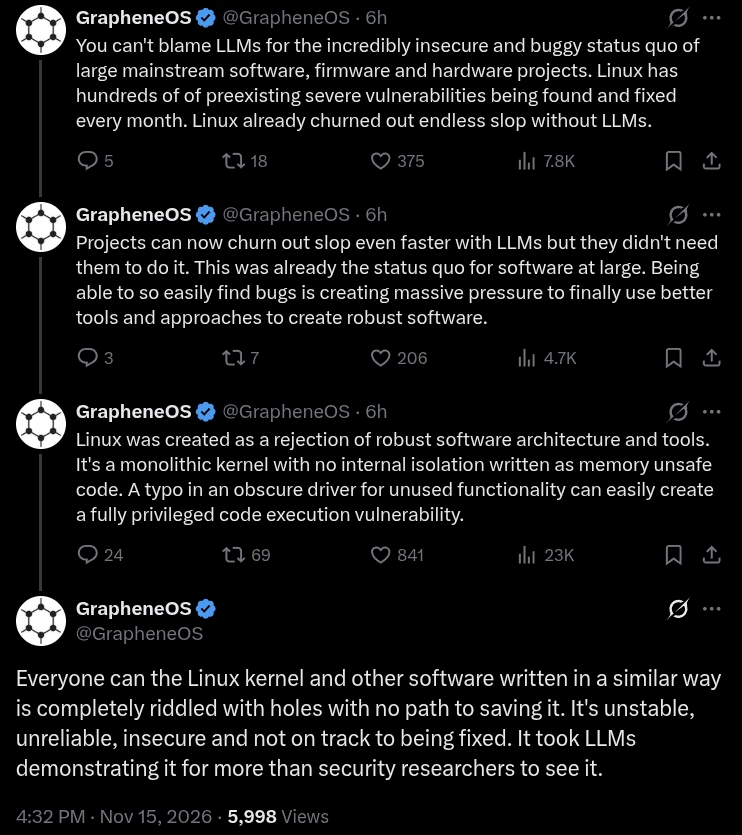
If buggy code is like messes around the house, AI is like turning on the lights. You can see them so much more clearly now, instead of just when you bump into them, but they’re not magically resolved. Compatibility with existing systems makes that immense (if not insurmountable!) task so much more difficult. Expecting to just throw tokens at fixing all software everywhere all the time is the height of hubris. Large Language models, and the tools around them are quite effective at finding solutions in a narrow problem space. No matter the problem, there will be considerations that need to be taken into account for to truly find valuable solutions.
In the best case scenario, many new things will need to be created from a radically different foundation. Yet personally, I’m quite pessimistic this is the road that will be taken. All signs point to continuing the charade of ‘good enough’, especially as long as the risks can be offloaded onto the public. This is actually one reason why I speculate personal devices may never actually be phased out entirely. It seems that there will always need to be a reason to keep the public exposed to some risk, even if just to avoid having to manage it.
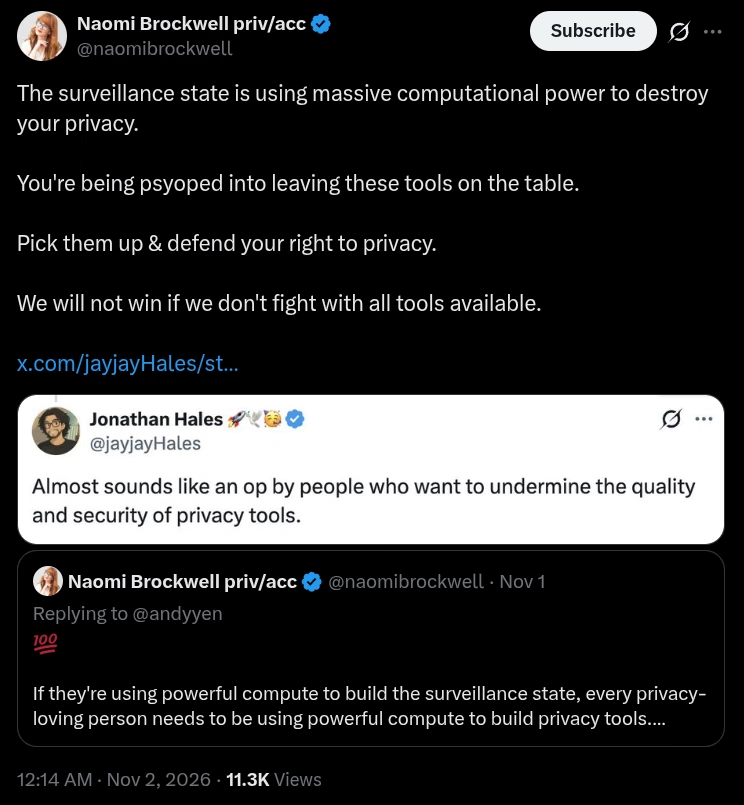
Personally, I like Naomi Brockwell, but I have a point of contention with this framing. The discussion is around a bit of a controversy around Proton and AI requirements in the workplace. Earlier this year, I wrote that we would regret our use of AI. Not because it can’t be useful, but because of the structural incentives around it. What critics of AI use are seeing is us collectively rushing to make the same mistakes that put us into this mess. Many of them recognize that technology is not a democracy. The path of least resistance isn’t builders creating a new private and secure foundation, it’s much more likely that just like with Big Tech social media, the public is going to be herded onto convenient platforms that will become increasingly difficult to avoid.
In my opinion, this conversation is only going to get more complex over time. Our tools, and their capabilities are growing in ways that make precision ever more important. Free vs non-free software was largely about source code availability and the rights to use it. In our time, we have an entirely new class of tools like machine learning models, with more precise concerns. What is in the training data? How is it curated? Is the model and training itself reproducible? Is the software to run the model available as Free Software? Is the model a reasonable enough size to run on hardware locally? Are there easy ways to fine-tune the model? There are different concerns and risks related to each of those considerations.
When we say, all the tools. Are we talking about building our own paths away from the mega-corporations, or are we merely talking about conceding with being subjects of their virtual fiefdoms?

Compute dominance
It shouldn’t be at all shocking that the immensely powerful software running on absurdly expensive machines would yield impressive results. For as long as tokens are billed cheaply, it would be almost negligent not to check anything and everything against them. At least as long as the thing you’re checking isn’t potentially worth stealing. When it comes to privacy, the mere existence of AI labs creates entirely new classes of risks.
Ultimately, it’s a question of scale. If giant corporations have the resources to detect flaws in software made by smaller entities as it gets written, how could that information be abused? It is then highly ironic that developers, testers, and security researchers using these cloud AI tools to build their systems are then feeding the beast not just with information on the actual, but also the potential. In this case, adopting AI tools helps those interested in privacy and security from some threats, but does little to help the dangers of complete information consolidation and control. It’s also worth keeping in mind, that there are non-trivial and difficult to manage security problems when using any LLM-derived AI assistance. These can range from prompt injection to hidden, yet baked-in backdoors.
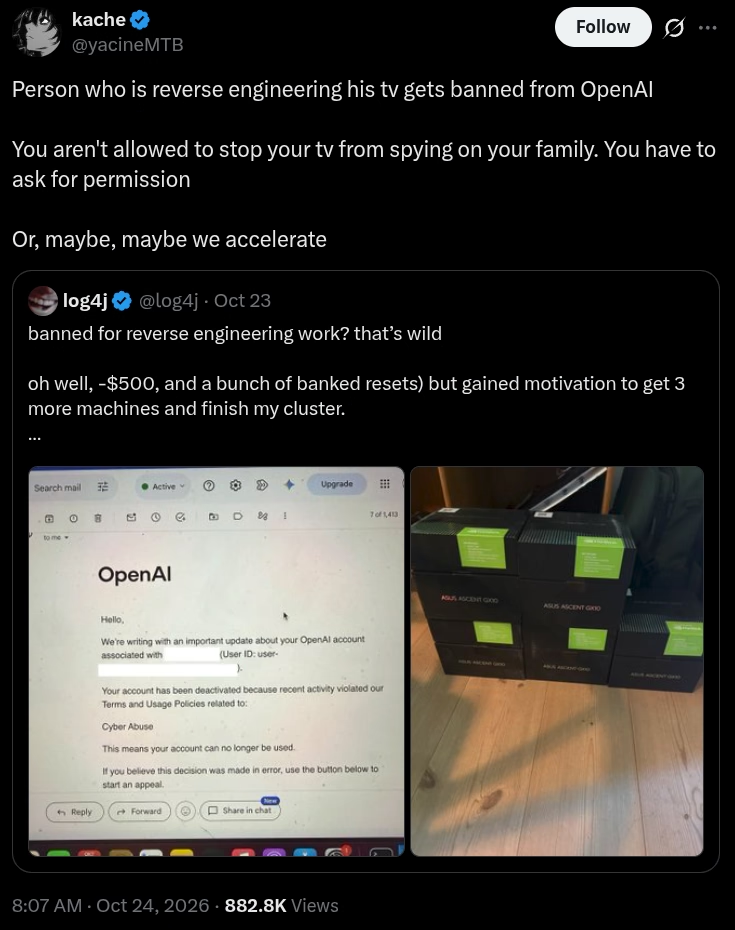
The biggest concern to me presently isn’t subtle sabotage, but just outright refusal. Under dubious ‘safety’ standards, scale can be weaponized to slow sincere work to a crawl. If ’this is what tech is now’ it is absolutely a downgrade in many significant respects. Because even though security and privacy research can continue without AI, it then has to work against well-financed AI assisted efforts. It’s a tilted playing-field, and people don’t really seem to have good answers on how that can be managed, to say nothing of addressed outright. Does this mean that just as people have a right to freedom of speech, they should also have a right to an actual ‘freedom to compute’? These days that question gets harder and harder to ignore.
You’ll notice that governments are far more interested in how they can seize control over the scale of corporate operations, rather than reaffirming any civil rights in cyberspace. It is my contention that these new technological structures are forcing not just our institutions to adapt, but testing our will to reclaim our individual and collective humanity. This is in equal parts a challenge and an opportunity. The imposition of these challenges does raise the bar in many uncomfortable areas, but the change opens the window to adopting genuinely better paradigms. The answer isn’t to wish that time could be turned back, but to reconstruct what matters without denial of how we got here.
Your part in turning the tide: there’s lots we can do
It’s understandable to be overwhelmed and frustrated by the noise around all this. I can’t blame anyone for wondering if anything really can make a difference in these confusing and chaotic times. To many, technology has felt like a runaway train for most of their lives that has only accelerated. To those who have attempted to wrestle with the issues, there have been many disorienting waves and violent thrashes making it difficult to stay afloat. After a good amount of reflection, I think I have some thoughts on what people can actually do in the face of it all.
I think the hardest mental shift for those who are and aren’t technical alike is that there is a fundamental shift in what ‘doing things on computers’ will look like moving forward. I certainly don’t want it to remove control and agency from people, but if we want to safeguard those things we have to work for it. Those who outright reject AI as a whole are missing out on understanding the changes, but those rushing to ’embrace it’ are being rapidly assimilated in far more ways than they can perceive.
In short, new AI tools are absolutely making big waves and there will be changes, but the game itself isn’t changing. Personal privacy, actual security, and genuine decentralization are still the real objectives for a better future. The great news is that much of our individual behavior doesn’t actually need to change a whole lot to add momentum in the right direction. With even small efforts, we can see wonderful opportunities on the horizon.
Virtual first-aid: The absolute basic checklist
-
Account security checkup
There have been many high-profile breaches even before AI-assisted attacks became a regular news story. As always, doing whatever you can to fortify your accounts is worth spending at least some time on. Old passwords and recovery questions on various sites are likely already in some collected database. Where possible two-factor auth (via totp codes) should be used.
-
Panic at the Disco: Burn baby burn
I’ve lately been spending time writing personal data to optical disks (DVD/Bluray). If you’re at all worried about a major cyber event it’s highly likely that there’s at least some media you’d like to have robustly preserved. I now believe that optical disks are the best medium to survive any near-term disruptions, and DVD readers are at least likely to be abundant in even apocalyptic scenarios. If nothing else you’re less dependent on the cloud, and disks are relatively easy to copy.
Regardless of your chosen method, now is very much a great time to figure out your backup strategy
-
Updates
This might be a bit controversial, but I think all-else being equal, any available updates are worth having. I know some people like to stick to ‘known-good’ versions of particular OS’s or software, but I’d argue running systems widely known to be exploitable is quite the risk these days.
An interesting counter-argument would be running a ‘good enough’ system as a live disc so that it’s at least immutable. If you have relatively consistent requirements/hardware I can imagine it’s a way to run a system that’s significantly resilient to disruption with relatively little effort.
Shields up: Beating the pack
-
Digital Minimalism, with agility
Now’s certainly a great time to ask “do I really need this?” before taking on a new device and/or subscription. Moments like these are excellent times to take the time to reevaluate how various devices and services fit into your life. It’s possible that cutting down on complexity can help make managing things quite a bit easier. With Google’s assault on open development we can sadly expect some constrained options up ahead.
It seems that the ongoing overhaul of cyberspace means we’ll want to keep attention and resources available for investing in genuine paths forward. Regardless of what comes ahead, it is clear that some kind of adaptability is crucial. It’s not just what we use that’s likely to change, but also how. In the worst of ways classrooms are full of AI early-adopters, there’s tons of work needed on understanding a sane path forward.
-
Expecting more, but avoid silly fights
The potential impacts on people affected by data breaches and other institutional lapses have only gotten more severe, this has to come with more diligent efforts to call for accountability and justice. We need more activists taking the time to platform and highlight the real personal harm that comes from reckless abuse of scale with no recourse. We need more allies who care about real-world results, rather than superficial fads.
I personally believe that fighting over AI use is a fruitless distraction from the actual issues regarding AI use itself. People are going to churn out slop to satisfy algorithms just like they did before the tools became available. People are going to continue to get drunk on algorithm-curated content that satisfies their biases with and without human intervention.
If a non-trivial amount of the effort spent on fighting people using AI was actually spent working on mentoring the skills we want to protect, or working on independent information management, we would be in a much better place. There are real objectives that directly address the root issues, they just require more from us than just imagined moral superiority. The escalation of these problems requires us to up-our-game regarding trying to preserve and participate in a human future, and what remains of a human-centered web.
The Bigger picture
I’m much less interested in if you’re opposed to AI entirely, or if you’re high on a discounted token supply. What I want to see is people embracing the challenge, responsibility, and adventure of working towards a different technological experience than what is currently being imposed on people. You shouldn’t fear tech, you should be concerned with how the consolidation of information and scale is leveraged against the people. Stay focused on the actual issues and what needs to be done becomes so much more clear. It’s easy to see the inertia and scale of the machine and think things are hopeless, but it’s also easy to forget that new tools have impacts on power as well. There’s actually a great deal of opportunity for creativity and innovation if we can spare enough capacity.
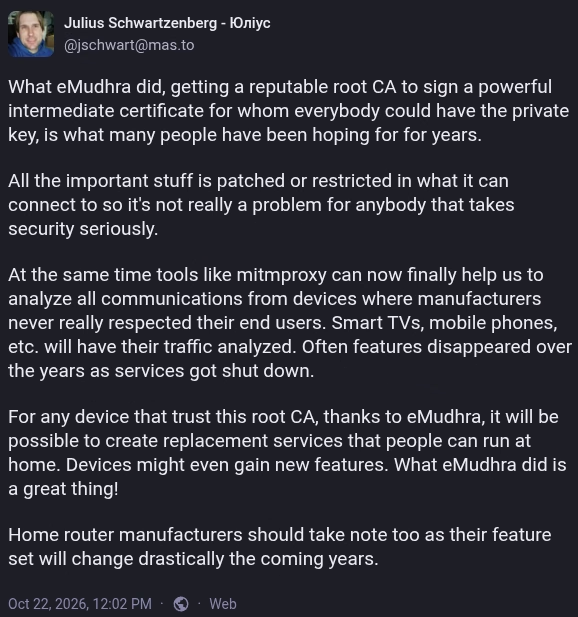
Machines won’t beat humanity because they’re any better than us.
People can only lose if they give up on themselves and those around them.
Sharing is caring!
Please send this post to anyone you think might be interested.
If you haven't already, don't forget to bookmark this site!
You can always subscribe with the RSS feed or get posts sent to your inbox via Substack.